


Does it feel like most of your patio heater’s warmth is floating straight up into the night sky?
Or have you ever had a gust of wind kill the flame right as your guests settle in for the evening?
For years, I faced the same frustrations, and I assumed the only fix was buying a bigger, more expensive heater.
But the problem wasn’t a lack of power. It was a lack of control.
The good news… you don’t need a new heater. With the right patio heater accessories, you can solve the most common performance and safety problems with the heater you already own.
This guide breaks down the best upgrades into three practical goals:
- Performance: Direct more heat where you need it and keep the flame lit
- Convenience: Make your heater easier to move, control, and protect
- Safety: Reduce tipping and burn risks for kids, pets, and busy patios
Heat Reflectors: The #1 Accessory for Stopping Wasted Heat
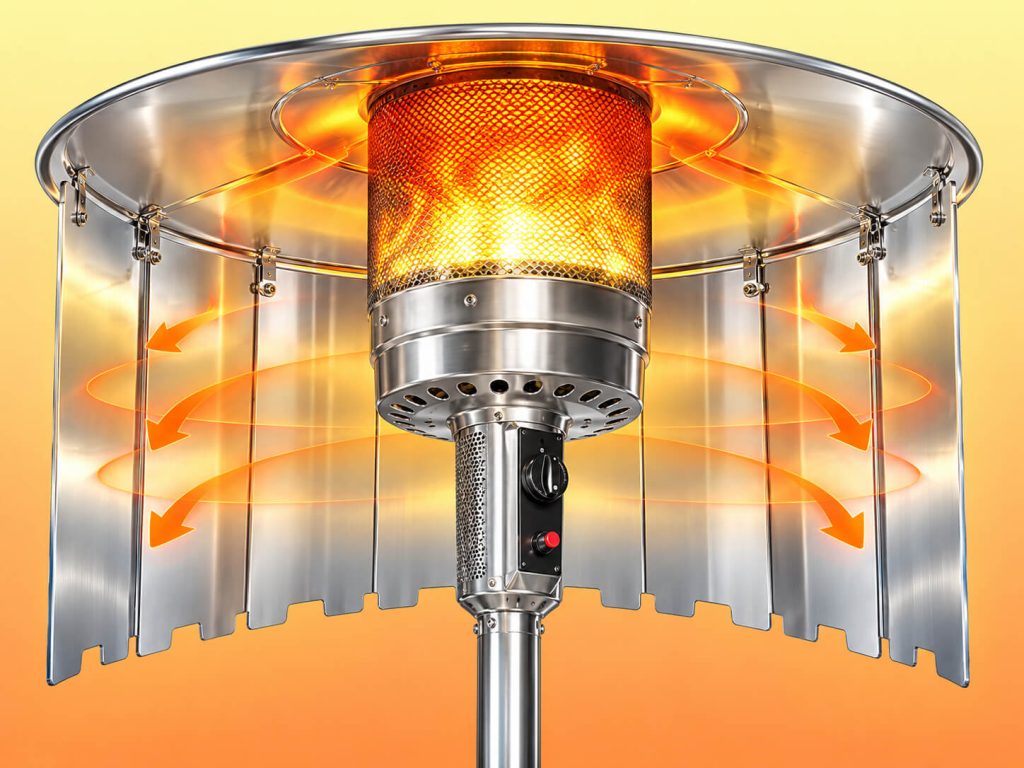
If your seating area still feels chilly with the heater running on full blast, look up. Standard mushroom-top propane heaters send a significant portion of their radiant heat straight into the air above your head. A patio heater heat reflector is the single most effective fix for this problem.
This aluminum or stainless-steel dish mounts above the emitter and acts like a mirror for warmth, redirecting heat horizontally toward your guests instead of letting it escape skyward.
The result is a wider, more comfortable “warm zone” right at seating level. This is especially valuable if your heater sits in an open yard, under a high pergola, or in any space with significant vertical clearance.
As the U.S. Department of Energy notes, placement and directional control are key factors in radiant heat comfort and a reflector directly addresses both.
💡 Before You Buy: Measure the diameter of your current reflector dish or emitter grid. Aftermarket reflectors are sized to fit specific diameter ranges — buying the wrong size is the most common mistake.
Heat Reflector Comparison: Which Type Is Right for You?
| Reflector Type | Coverage | Material & Fit | Typical Cost | Best For |
|---|---|---|---|---|
| OEM Replacement Dish | Focused, straight down | Basic finish; model-specific bolts | $30–$70 | Replacing a damaged original |
| Aftermarket Deflector | Wider horizontal spread | Aluminum or stainless; adjustable brackets | $50–$120 | Most homeowners upgrading coverage |
| Premium Directional Reflector | Angled for targeted zones | Polished finish; clear fit guidance | $100–$200+ | Commercial patios or precise zone heating |
Wind Guards: Stop the Flame from Blowing Out on Breezy Nights
If you’re constantly relighting your propane heater on breezy evenings, a patio heater wind guard is the simplest fix available. This accessory surrounds the burner element, shielding the pilot light and main flame from gusts that would otherwise extinguish it.
Quartz Glass vs. Stainless Steel Mesh Wind Guards
Most wind guards come in two materials, each with a different set of trade-offs:
- Quartz glass: Clear view of the flame, aesthetically clean look, but can shatter if knocked over or exposed to rapid temperature changes
- Stainless steel mesh: More durable and lighter than glass, less prone to breakage, but partially obscures the flame view
Either option dramatically reduces frustrating shutdowns and creates a more consistent heating experience and is especially valuable for restaurant and café patios where relighting disrupts service.
⚠️ Important Safety Note: A wind guard is not a substitute for common sense in severe weather. The U.S. Consumer Product Safety Commission advises against using patio heaters in storms or high sustained winds. Never improvise a wind guard with solid materials that could restrict airflow. Always use an accessory specifically designed for your heater model.
Convenience Upgrades: Remote Controls, Wheel Kits & Protective Covers
Small daily annoyances can quietly undermine how much you actually use your patio heater. These three accessories solve the most common convenience problems.
Remote Controls & Smart Plugs for Electric Heaters
If you have an electric patio heater, you can add smart home convenience with a remote control or outdoor-rated smart plug. Turn the unit on and off from your seat without getting up to reach high-mounted controls or schedule it to preheat before guests arrive.
⚡ Amperage Check: A standard 1,500-watt electric heater draws approximately 12.5 amps. Before purchasing a smart plug (such as Kasa EP40 or Wyze Outdoor Plug), confirm it is:
- Rated for outdoor use (weatherproof housing)
- Rated for at least 15 amps continuous load
- Compatible with your home’s circuit breaker capacity
Heavy-Duty Wheel Kits for Easier Heater Mobility
The small plastic casters included on most freestanding heaters are poorly suited for pavers, uneven concrete, or grass. A universal heavy-duty wheel kit replaces them with large rubber wheels that roll smoothly across almost any surface.
- Cost: $30–$80 for most universal kits
- What to look for: Load rating that exceeds your heater’s weight (with full propane tank), rubber wheels rather than hard plastic, and bolt patterns that match your base
- Best for: Anyone who stores the heater in a garage and moves it to the patio regularly
Fitted Protective Covers for Year-Round Heater Protection
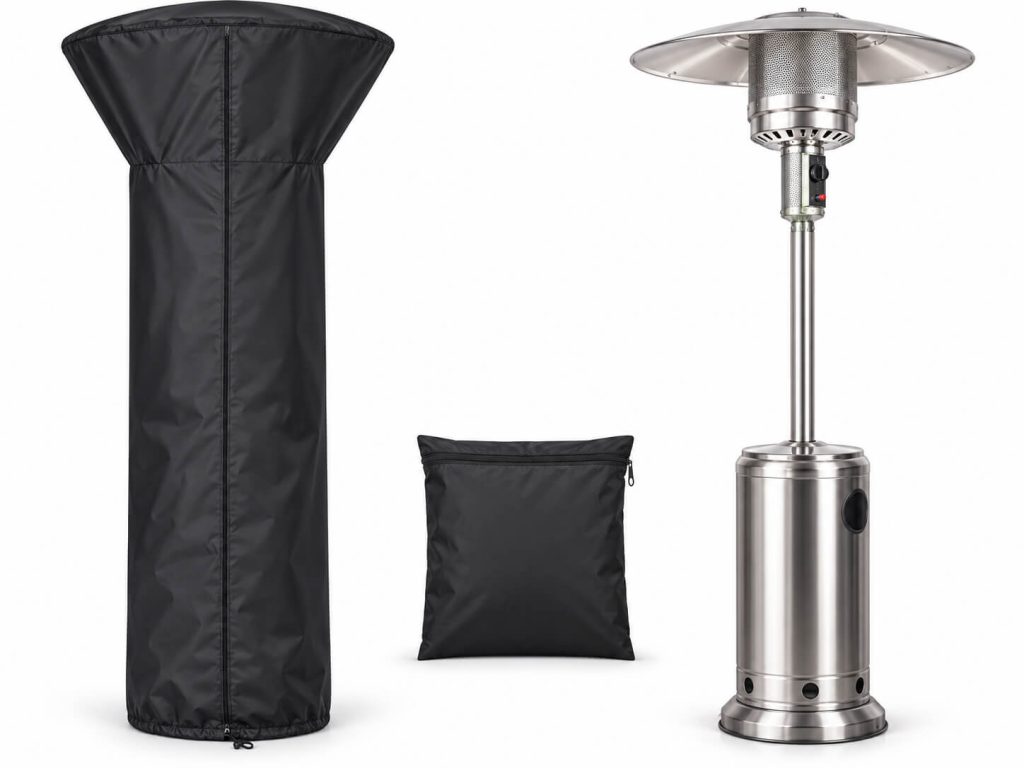
A breathable, weather-resistant patio heater cover is one of the highest return-on-investment accessories available. For $20–$60, it protects your heater’s burner, igniter, finish, and internal components from:
- Rain and moisture (the leading cause of igniter failure)
- UV ray damage that fades and degrades finishes
- Pollen, salt air, and debris that clog burner ports
- Winter ice and frost damage
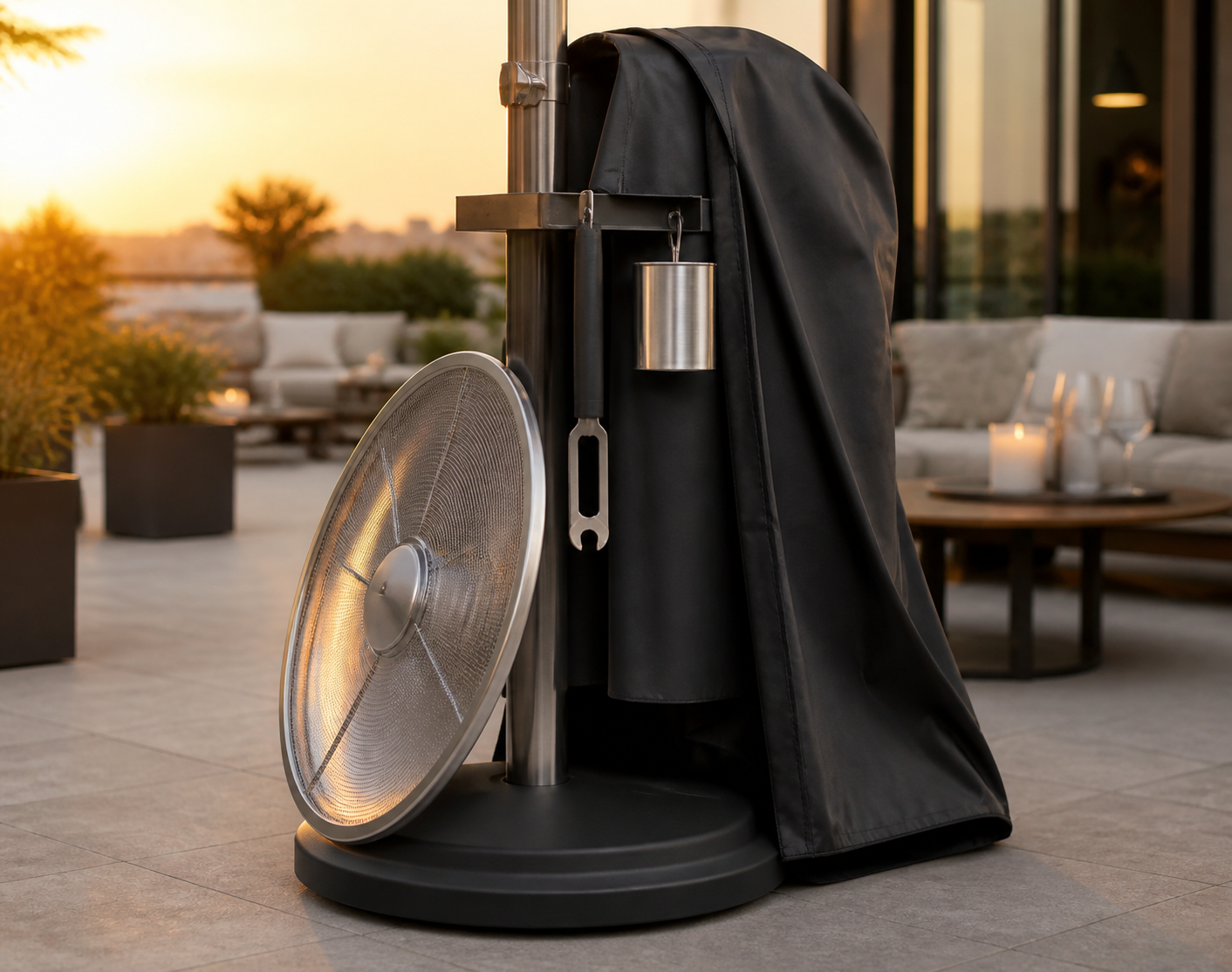
A cover prevents corrosion and keeps critical components clean, ensuring your heater fires reliably at the start of next season. Always choose a cover sized specifically for your heater’s height and base diameter.
Patio Heater Safety Accessories: Guards & Weighted Bases
If you have children, pets, or a high-traffic patio, safety accessories aren’t optional… they’re essential. These upgrades address the two biggest physical risks of freestanding patio heaters: accidental burns and tip-overs.
Protective Screens & Emitter Guards
A patio heater protective screen creates a secondary physical barrier around the hot emitter grid. While it doesn’t eliminate all burn risk, it prevents direct contact from a child’s curious hand or a pet’s nose, which are the most common sources of accidental burns around backyard heaters.
What to look for in a protective screen:
- Mesh or perforated design that preserves full airflow. Never use a solid barrier
- Mounting that keeps the screen clear of the emitter surface itself
- Heat-resistant materials rated for your heater’s output temperature
- Model-specific fit or verified universal sizing for your emitter diameter
Weighted Bases & Anchoring Kits for Tip-Over Prevention
Tall freestanding patio heaters are inherently top-heavy and vulnerable to tipping in wind or from accidental contact. A weighted base or anchoring kit is one of the most important safety accessories you can add.
Your two main options:
- Sand or water fill rings: Slip over the existing base and fill with sand or water for added ballast. Easy to move when drained, affordable ($20–$50), and effective for most residential patios
- Bolt-down anchor kits: Permanently secure the heater base to a concrete or deck surface. Maximum stability — the right choice for commercial patios, high-wind locations, or anywhere the heater stays in one place
⚠️ Tip-Over Risk Reminder: Always fill the weight bladder or ballast ring that came with your heater before first use. Many tip-over incidents happen when heaters are used without their included stability accessories.
How to Choose the Right Patio Heater Accessories Without Wasting Money
Before you start adding things to your cart, use this four-step process to make sure every accessory you buy solves a real problem.
- Identify your #1 frustration first.
Is it wasted heat drifting upward? A flame that keeps blowing out? A heater that’s too heavy to move? Start with one problem and solve it completely before moving to the next. - Measure your heater before ordering anything.
Write down your heater’s brand, model number, emitter diameter, and base dimensions. Compatibility is the most common reason for returns. A measurement takes 60 seconds and saves a trip to the post office. - Prioritize performance and safety over aesthetics.
A heat reflector or weighted base delivers measurable, immediate value. Decorative add-ons are fine once the fundamentals are covered, but don’t start there. - Do the cost-vs-benefit math.
A $70 reflector that significantly expands your warm zone is a great investment. But if you’re approaching $300 in accessories, pause and compare that total against the cost of a newer, better-equipped heater that solves the same problems from the factory.
✅ The Right Accessory Mindset: The smartest upgrades aren’t the most expensive ones — they’re the ones that solve a specific, real-world frustration. One well-chosen accessory can add hours of comfortable outdoor living without the cost of starting over with a new heater.
📋 Key Takeaways
- Always match accessories to your heater’s exact model, fuel type, and dimensions — compatibility prevents safety hazards and wasted money
- For better heat distribution, a heat reflector is the single most impactful upgrade for standard mushroom-top propane heaters
- For wind protection, a quartz glass or stainless steel mesh wind guard eliminates most flame blowout problems
- For safety, a weighted base or anchoring kit should be a priority for any tall freestanding heater, especially with kids or pets nearby
- For electric heaters, verify your smart plug is outdoor-rated and handles at least 15 amps before purchasing
- Start by solving your single biggest frustration. You don’t need every accessory to make a significant difference
📚 Related Guides
Frequently Asked Questions About Patio Heater Accessories
What is the single most effective patio heater accessory?
For most standard mushroom-top propane heaters, a heat reflector is the most impactful upgrade available. It redirects radiant heat downward and outward toward people instead of letting it escape into the air above while dramatically increasing the usable warmth you feel from the same BTU output.
Can I add a wind guard to any patio heater?
Not automatically. Many universal-fit wind guards are available, but you must verify that the guard you choose allows for proper ventilation around the burner and doesn’t interfere with your heater’s built-in safety features like the thermocouple or tilt switch. Always cross-reference with your heater’s manual before purchasing.
Are universal wheel kits safe to use on patio heaters?
Yes, when chosen and installed correctly. The key is selecting a kit with a load rating that exceeds the weight of your heater (including a full propane tank). Proper installation is critical for maintaining base stability, so follow the manufacturer’s instructions carefully.
How do I know if a heat reflector will fit my patio heater?
Measure the diameter of your current reflector dish or the emitter grid the new reflector will mount above. Most aftermarket reflectors list the diameter range they are designed to accommodate and include adjustable mounting brackets for a secure fit.
Do patio heater covers really make a difference?
Yes, especially for longevity. A breathable, weather-resistant cover protects the igniter, burner ports, and finish from moisture, UV damage, and debris, which are the primary causes of early heater failure. A $30–$60 cover can extend your heater’s reliable lifespan by several seasons.
What is the best way to stabilize a tall patio heater?
Start by fully filling the weight bladder or ballast base that came with your heater. Many tip-overs happen because this step is skipped. For additional stability, add a sand or water fill ring around the base. For permanent commercial installations or high-wind locations, a bolt-down anchor kit provides maximum security.
Disclosure: As an Amazon Associate, I earn from qualifying purchases. Product specifications sourced from manufacturer data and Amazon product listing.


